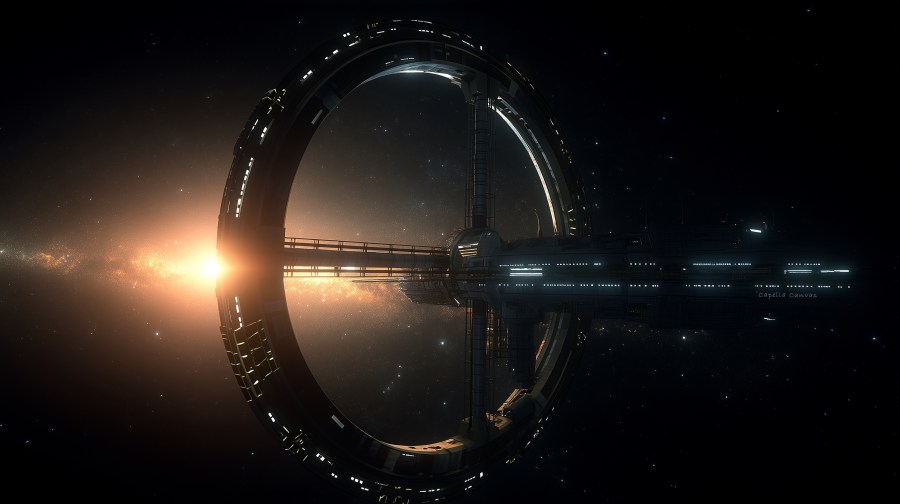
A massive ring-shaped space station with illuminated windows and extended docking structures, floating in deep space and backlit by a bright star.

From Long Silences to Burning Thrusters

It’s been a while.

Longer than I meant it to be, and longer than I would have liked. But stories have a way of waiting for you when you need to step away for a bit, and this past year has been very good at insisting on that. Between a few life-sized plot twists, a move to a new city, and a handful of real-world chapters I hadn’t exactly planned for, this little corner of the internet grew quiet.

But I never stopped thinking about stories.

Some of you remember that, for a long time, I’d been sharing scenes here from The Silence of Ancient Light — a big, serious, slow-burn science fiction project that’s grown into something rather sprawling and strange and dear to me. That story is still very much alive. I haven’t abandoned it. If anything, I’ve learned that sometimes a story needs a little space to breathe, so that when you return, you can see it more clearly.

And while I was letting that one simmer, something unexpected happened.

I began writing a very different kind of story.

It started as a kind of creative palate cleanser — lighter, smaller in scope, faster on its feet. A story more interested in voice and character than in cosmic philosophy. Something that didn’t take itself quite so seriously. And somewhere along the way, that little side project stopped being little. It found its own rhythm. It’s own momentum. Its own sense of fun.

If you read To Wander the Silent Dark, you may remember that I had a bit of fun leaning into rhythm, voice, and the sheer pleasure of language. That, it turns out, was a clue. This new project carries a little of that same energy, though in a very different form.

Right now, I’m deep into the editing stages of that new work. It’s novella-length, quick-moving, and deliberately playful in ways my longer projects rarely are. I’m not quite ready to share details yet — not the title, not the characters, not the plot — but I wanted to let you know that something new is taking shape.

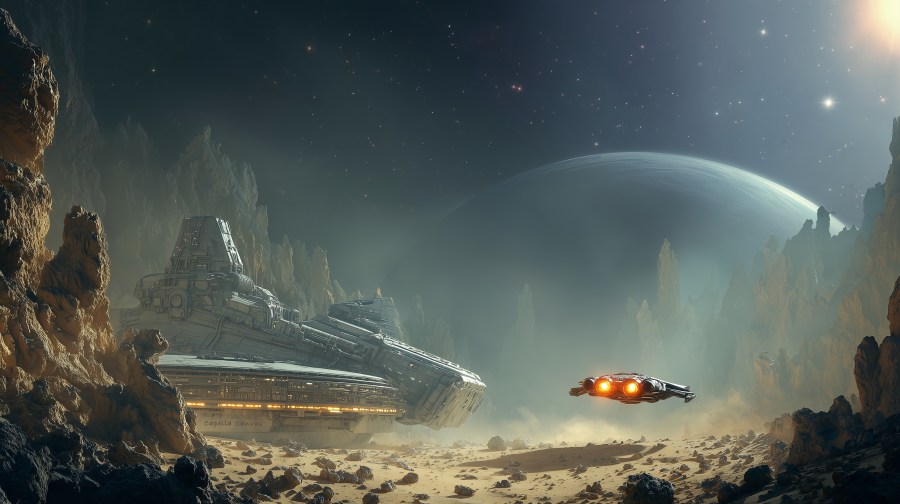
The image below is a small, spoiler-free glimpse of the world it inhabits.

More soon.

And thank you for being here, even when I’ve been quiet.

A massive ring-shaped space station with illuminated windows and extended docking structures, floating in deep space and backlit by a bright star.
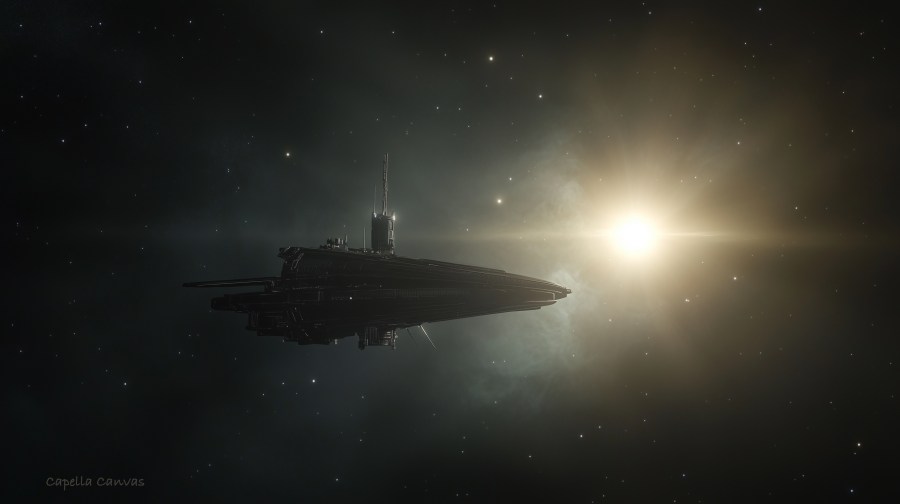
A lone, silhouetted spacecraft drifts through a vast, star-filled expanse toward a glowing celestial light in the distance. The scene evokes themes of exploration, fate, and the unknown, with subtle gradients of shadow and starlight.

To Wander the Silent Dark: A Space Opera in Verse

Upon the Void’s rim, voice rises unfearing,
By starlight and sorrow, their soul-song begun;
One world abandoned, now wander they star-bound,
To realms yet unrendered, to lands ever spun.

🚀

Do you hear it? The vast, silent hum of the cosmos, the pull of the stars, the quiet gravity of fate?

This is a story told not in prose, but in verse — an epic space opera that carries the echoes of ancient poetic traditions into the depths of the far future. Inspired in part by Harry Martinson’s Aniara and the Norse Poetic Edda, this tale weaves together timeless themes of fate, free will, and humanity’s yearning for answers amidst the infinite void.

Unlike the ongoing adventures of Anna and her friends, this is a standalone journey (don’t worry, we haven’t abandoned them! We’ll be returning shortly). It follows the crew of Aeon’s Echo — five souls adrift on a starship far from home — as they grapple with a signal that seems to come from beyond the veil of understanding. They all perceive the beacon in their own unique way: some see it as a call, others as a warning, a promise, or even a trap. The choices they make, and the mysteries they uncover, are written in the stars — both figuratively and literally.

Why verse? Some stories demand the rhythm, weight, and lyricism that poetry provides. Here we draw on imagery and sound in a way that prose might not, each line evoking the grandeur of space and the fragile humanity of those who dare to journey through it.

If you’re drawn to the sweeping majesty of science fiction, the haunting beauty of space, or the philosophical dilemmas of choice and destiny, I hope this tale will resonate with you. It’s a blend of the ancient and the futuristic, as much about the vastness within us as it is about the endless void beyond.

Fans of Aniara (Martinson’s, but perhaps also my own?) will recognize the existential underpinnings, while readers of the Poetic Edda or even Tolkien’s The Lay of Beren and Lúthien might sense a familiarity in the cadence and structure (in shorter form than those epic works, I promise). At its heart, however, this is a story for anyone who’s ever gazed up at the stars and wondered: What if?

So, take a moment and explore To Wander the Silent Dark. I’d love to hear your thoughts — drop a comment, leave a like, and follow if you haven’t already. Let’s talk about fate, space, and everything in between.

Thank you for coming along on this journey into the silent dark.

Read the full poem at

To Wander the Silent Dark

(1,558 words; 6 min 13 sec reading time)

🚀

A lone, silhouetted spacecraft drifts through a vast, star-filled expanse toward a glowing celestial light in the distance. The scene evokes themes of exploration, fate, and the unknown, with subtle gradients of shadow and starlight.