
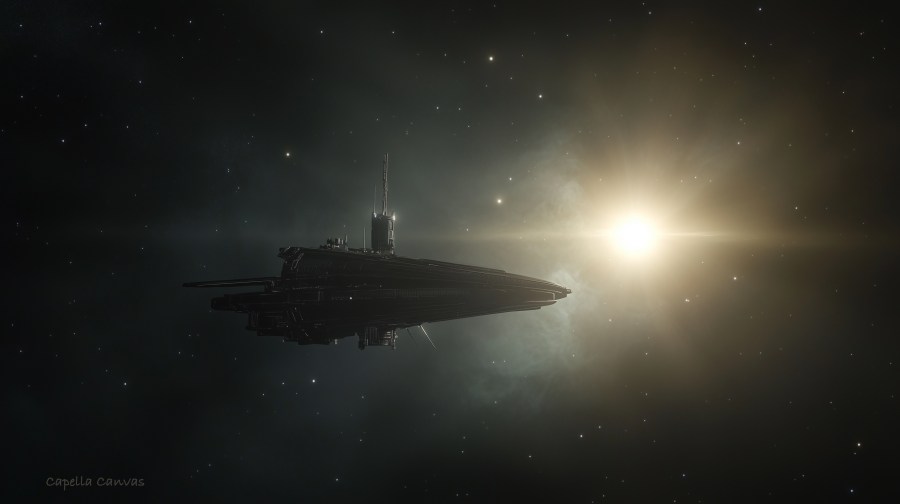
Upon the Void’s rim, voice rises unfearing,
By starlight and sorrow, their soul-song begun;
One world abandoned, now wander they star-bound,
To realms yet unrendered, to lands ever spun.
🚀
Do you hear it? The vast, silent hum of the cosmos, the pull of the stars, the quiet gravity of fate?
This is a story told not in prose, but in verse — an epic space opera that carries the echoes of ancient poetic traditions into the depths of the far future. Inspired in part by Harry Martinson’s Aniara and the Norse Poetic Edda, this tale weaves together timeless themes of fate, free will, and humanity’s yearning for answers amidst the infinite void.
Unlike the ongoing adventures of Anna and her friends, this is a standalone journey (don’t worry, we haven’t abandoned them! We’ll be returning shortly). It follows the crew of Aeon’s Echo — five souls adrift on a starship far from home — as they grapple with a signal that seems to come from beyond the veil of understanding. They all perceive the beacon in their own unique way: some see it as a call, others as a warning, a promise, or even a trap. The choices they make, and the mysteries they uncover, are written in the stars — both figuratively and literally.
Why verse? Some stories demand the rhythm, weight, and lyricism that poetry provides. Here we draw on imagery and sound in a way that prose might not, each line evoking the grandeur of space and the fragile humanity of those who dare to journey through it.
If you’re drawn to the sweeping majesty of science fiction, the haunting beauty of space, or the philosophical dilemmas of choice and destiny, I hope this tale will resonate with you. It’s a blend of the ancient and the futuristic, as much about the vastness within us as it is about the endless void beyond.
Fans of Aniara (Martinson’s, but perhaps also my own?) will recognize the existential underpinnings, while readers of the Poetic Edda or even Tolkien’s The Lay of Beren and Lúthien might sense a familiarity in the cadence and structure (in shorter form than those epic works, I promise). At its heart, however, this is a story for anyone who’s ever gazed up at the stars and wondered: What if?
So, take a moment and explore To Wander the Silent Dark. I’d love to hear your thoughts — drop a comment, leave a like, and follow if you haven’t already. Let’s talk about fate, space, and everything in between.
Thank you for coming along on this journey into the silent dark.
Read the full poem at
(1,558 words; 6 min 13 sec reading time)
🚀

 Matt Fraser