The Silence of Ancient Light Goes Audio!

I promised you an audio narration, and the first episode is here! I know it took a little while to get this up, but the learning curve to produce what amounts to a podcast episode was a little steeper than I expected. And, having now recorded, edited, mastered, and published this first episode, I have learned a lot, and I have learned that I have a lot more to learn.

I need to get a lot better at narration, for one thing. I thought I was a pretty good public speaker, but speaking into a microphone while in a small, somewhat sound-deadened room changes almost everything. I also learned a lot about noise floors, and this too is an area I believe I can improve. Indeed, dealing with the noise floor was the major reason this took so long to produce.

I’ll go into more detail in the next post, but some of you want to get right to it, don’t you? So, without further ado, here is a link you can play right from your browser:

Once I feel a bit more polished at audio production, and once at least a few more episodes are ready, I’ll set this up as a proper podcast, one you can load into your favorite podcast player (probably your phone, for most of you). I’ll talk more about how setting up podcasts are a bit different from just linking an audio file on the website, and how setting up a full audiobook is considerably different from creating a podcast (though they all start from the same basic process of recording, editing, mastering, etc).

I’ve also updated the original page with the text to contain this same link. For those of you who’ve misplaced how to navigate to it (hint: it’s all there in the menu at the top of every page!), it’s here: Arrival.

Yes, I know that I need to work on my plosives, and maybe better de-essing. And my breath control. That’s a problem, you know, breathing while a microphone is stuffed in your face. I think mostly I need to learn to relax while narrating, get into the groove that I feel when I’m just reading aloud to someone (or even the groove I found when I did my first — well, so far only — author reading).

Once I have that all down, I’ll redo this episode.

And, oh yeah, keep actually writing more episodes!

Let me know what you think! And, seriously, don’t spare my feelings. I know it’s not full-on Audible Studio quality, so if you have ideas about how I can improve, I’m all ears! So to speak.

Next up: the technical details!


header image credit: Dmitry Demidov / Pexels

The Recording Studio

A few days ago I let slip (like how that sounds like it was an accident?) that I am going to try my hand at podcasting episodes of The Silence of Ancient Light. Now, I have never done this before, and it’s not quite as simple as it might seem. One doesn’t just put on the earbuds that came with your mobile phone and hit Record and start speaking. The learning curve on this is a tad steeper than that.

If it weren’t, there wouldn’t be professionals out there making a decent living doing this (and a bunch more trying to break into the field).

I’m not trying to become a professional audiobook narrator, I’m just trying to produce a reasonably decent narration of my own book for you to enjoy. After all, since making that announcement, a handful of you have let me know that you are quite enthusiastic about this idea. Seems audiobooks are a thing? Plus, it seems like it might be fun.

So, I took the opportunity to invest in a decent “broadcast-quality” headset, with a proper dynamic microphone. My thinking here is really three-fold. Perhaps like many of you, I now spend large parts of my working days on videoconferences with my colleagues, and the old earbuds, despite being high-quality for listening, are turning out to be less than optimal for delivering quality when I’m the speaker. They’re ok for a phone call, and yeah, they’re ok for an online meeting, but it’s pretty clear they won’t cut the mustard for recording an audiobook. So, improving my teleconference experience is part one.

Perhaps also like many of you, I’m watching quite a bit more streaming films and shows in the evenings these days (I know, I know, I’m supposed to be writing, but forgive me, ok?). Some of those are with my wife, but when it comes to science fiction shows (The Expanse, anyone?), she really isn’t interested. So, when I watch those, it’s on my own, and in order not to disturb her, I need headphones. To date, I’ve been using those same earbuds I mentioned in the previous paragraph, as well as a too-short extension cable, which has meant sitting on the floor closer to the TV. Not very comfortable. A decent pair of headphones, that do a better job of muffling outside sound, and a longer cable, are really what I need here. So, improving my streaming experience is part two.

And then, of course, there’s this whole recording thing. Now, most audiobook narrators and producers will tell you to go with a standalone high-quality studio microphone, something like the venerable Shure SM58 (with which I’ve had much experience decades ago when I ran sound for a local pop band, but that’s a whole other story), and to avoid headsets. I won’t say they’re wrong, and ultimately, if I keep doing this, I may still end up going that route. But, I really wanted to be freed from having to be careful about maintaining a set distance from a mounted microphone, so I thought… headset! But not a gaming headset with its cheap mic, but a broadcast-oriented professional headset. And, of course, I didn’t want to buy new headphones (with mic!) just for streaming and videoconferencing, and also another expensive mic for recording. So, minimizing how many different pieces of expensive equipment I’m purchasing is part three.

IMG_0514 2

So, I picked a headset based mainly on the quality of the attached microphone, the Audio Technica BPHS1. Overall, I’m pretty happy with it, but being pro gear, it has a few complications when it comes to attaching it to a computer (remember, videoconferences). For one, it has two cable connectors, neither of which is the standard 1/8″ connector common on laptops, computers, many phones, etc. The input connector, for the headphones themselves, is a more prosumer-like 1/4″ connector, which you would commonly see on higher-end stereo gear, guitar amplifiers, analog mixing boards, that sort of thing. No problem, 1/4″ to 1/8″ adapters exist.

IMG_0516

The other connector, for the microphone, is an XLR connector, which is a larger 3-pin connector commonly used only for pro-level recording. This is the same connection that the afore-mentioned Shure SM58 uses, for instance. This connection is common for low-output analog devices like microphones that will need pre-amplification. To get a signal from the XLR-connected microphone into the computer while maintaining high quality, I needed a very special adapter, an XLR-to-USB adapter, which is more than just a plug adapter, it’s also an analog-to-digital converter. There are many ways to achieve this goal, but I went with the relatively straightforward and very easy-to-use Shure X2u. It’s a bit like a cylinder, with the XLR jack at one end and the USB port at the other, and very simple controls and indicators on the side. With this device, I can record straight to my laptop, which is also not something the professionals recommend, but, hey, I’m already going a bit overboard here! I have a very quiet (albeit old) MacBook Air, with no spinning drives or loud fans, so as long as I’m not typing on it, it doesn’t make much background noise. And, this way the MacBook doubles as my reading platform, since after all, I have to read from something while I’m narrating, right?

IMG_0518

So that’s the technical equipment, but there’s also a non-technical component very much required. A quiet room. And, not just quiet, but acoustically deadened. Professionals use a proper recording studio, with specially insulated walls and door, and fancy foam shapes all over the walls and ceiling to trap any stray echoes. That’s a bit much for a podcaster on a budget to reproduce, unfortunately, but there are ways to achieve some of this at home. Even if, like me, you live in a small condo in a noisy building on a noisy street in the heart of a noisy city, with trucks, trains, and planes constantly rumbling around. When my upstairs neighbors run the faucet, I hear water swooshing through the pipes. For that matter, when they walk, I feel it in my own floor, as the structural timbers carry an echo of their steps down one level. I’m pretty sure my downstairs neighbor has the same experience with regard to me. Even if someone walks by outside, on the sidewalk, holding a normal conversation, I can hear it inside my unit with the windows closed, along with birds chirping in the trees that are one of the things which make this neighborhood attractive.

It is noisy here, and that fancy new sensitive microphone can hear it all.

I can’t stop all of that, but what I can do is set myself up in the closet, with the doors shut, and hang wool blankets over the doors, another laid across the wooden floor, and otherwise depend upon the hanging clothes to act as natural dampeners. Does it work? We’ll soon see, but I just spent two hours in there trying my best to get about twenty or thirty minutes of recorded narration. My first attempt, which I’m about to start editing down.
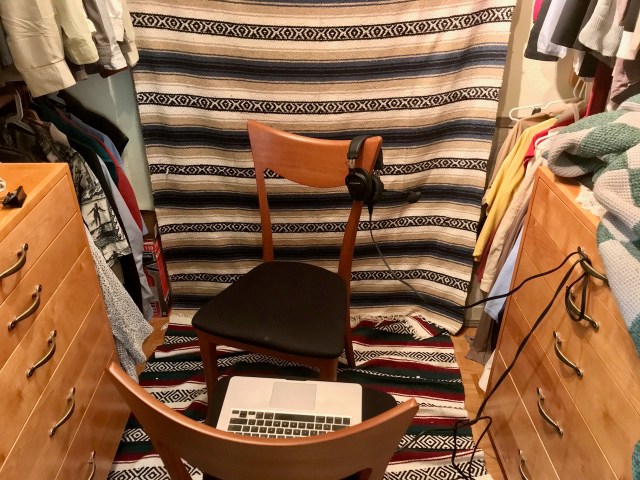
IMG_0513

When you listen to yourself through headphones in a quiet room while speaking into a quality mic placed right up to your mouth, you hear every timbre of your own voice, not the way it sounds in your own head, but the way others hear you. It is weird. But I already knew that, and so did you. The other thing you notice is every time you take a breath. Breathing is loud. And when your mouth gets dry and as a result you lisp a little on a phoneme. Or you stumble on a word. Or burp. Yeah, that happened, too.

Folks, this is hard. Eventually I learned to stop killing the recording every time I stumbled, just pause, say “scratch that last bit” into the mic, pause again, and start again, backing up a few sentences or to the beginning of the paragraph. The constant restarting of the recording was far too distracting, so I just let it run, made “audio notes” when I had stumbled, and kept going. My next job is to go through and edit out all those bits to turn it into one continuous narration.

And I won’t be done there, either. Just because I’ve got my voice recorded doesn’t mean this is a finished and produced piece of work, ready to publish. I need to filter out the noise floor, compress things so that the volume is consistent throughout, see if I have too many “esses” from my S’s or pops from my Ps (not sure what I can do about those, except do it again?), and so forth. And, when I’m happy with the vocal narration — if I ever am — I have to decide if I’m going to find some music to go with it (or not; that’s a decision point to make), and perhaps other adjustments to turn the audio file into an actual podcast.

So, the first episode is recorded, comprising the first three scenes that you’ve already read, but it’s still going to take a while to get all the above done.

Stay tuned, friends.


Header image by user:KutterKind / Pixabay.com under Pixabay License

All other images in this post are my own

Breaking Radio Silence

An eerie quiet has filled the halls and chambers over here. Like ancient abandoned alien space stations, orbiting planets no longer bustling and buzzing with technology, the passages have grown musty with disuse, where they aren’t emptied to raw vacuum. Like visiting starships, wounded and crippled, responding to desperate queries with nought but static. Like a city gone silent, cars no longer jamming the freeways, buses running empty, the denizens hiding out in their homes while an unseen killer stalks the streets and marketplaces, ready to take the unwary traveler.

But now it is time to break the silence, to put pen to paper and fingers to keyboard once again, and… voice to microphone? More on this in a moment.

Yes, dear readers, three (!!!) months ago I last wrote on these pages, and then only to speak of my despair, my crisis of confidence. Our world has changed since that last post. Little did most of us realize that just a scant few weeks later we would be living in lockdowns and isolation, quarantining ourselves from friends, families, neighbors, and colleagues in a desperate bid to halt the spread of a novel virus. We have shifted our work patterns — if we still have work — to spend nearly all our time within the confines of our homes. We have become experts at Zoom happy hours, and also grown weary of hours in front of yet another screen, yet another camera, putting on an upbeat attitude and smiling face.

Even when we are healthy, and still employed, it hasn’t always been easy for many of us to remain in a creative headspace. I entered the pandemic lockdown already concerned about the state of my writing, and the additional concern about the health of, well, everyone has not helped. This has not been a productive time for me. At least, not visibly so.

Now, however, we begin to peer out from under our shells, come out from behind our rocks, and tread (carefully! carefully!) across the sands to dip our toes back into the waters of life. We emerge into a changed world, perhaps permanently so, but we are humans, and that means at our core we are adaptable. That is our survival trait. We adapt. And creativity begins to return.

I am ready to write again, my friends. There are three stranded astronauts who need me. They are desperate to find a way off that rock I’ve marooned them on, and without me, they cannot do it. I cannot in all good conscience just leave them there, so I need to write them a way out of their predicament. Well, some of them, anyway. No promises they’re all going to make it!

I am also ready to speak again. I am ready to try my voice at narration. Do you like audiobooks? Do you listen to podcasts? As I write and publish new episodes, I shall also record those episodes, beginning with those already appearing in these pages.

It will be experimental at first. I’ll be learning the ropes of producing podcast-style episodes. It may take a few iterations before it goes smoothly. But for those of you who enjoy listening to stories, and who also hopefully enjoy my stories, this will be for you.

And for me, of course. It’s going to be fun!

And it just may be a trigger to further spark some creativity and break me out of my funk.

It’s time to write. It’s time to read. It’s time to speak.


Image by Pierluigi D’Amelio from Pixabay

Crisis of Confidence

Lately I’ve been suffering from a lack of confidence in my story, and thus in myself as a writer, and it came about not because of any criticism or anything similar that came my way. It came about because of a writing contest, a contest I did not even enter!

How can not entering a contest cause me to lose confidence, you may ask? After all, this was (still is, in fact) a contest that specifically does allow unfinished works, so it would seem like a perfect fit for me, yes?

Alas, as with most contests of this nature, the entry requires a synopsis. Nothing particularly unusual about that, and every writer eventually needs to come to grips with producing the scary synopsis. However, typically for contests, this synopsis is limited to a single page, double-spaced, in 12-point type, with 1″ margins all around. Oh, and the first line really should be a heading stating “Synopsis,” so that’s one less line to work with. That means the synopsis is pretty much limited to somewhere between two-hundred and two-hundred-fity words, which is not a lot.

The typical five-page synopsis written for an agent or editor’s consideration has an opening statement about theme and genre, a closing statement about character arcs, and in between summarizes all the major plot points that impact and influence the main characters.

That’s impossible to do for a novel-length work in two-hundred-fifty words.

So, a one-page contest synopsis should instead focus on theme and how the character’s growth and conclusion illustrate that theme, and that’s about it.

Trust me, while it might be just one-fifth as many words, it is five times harder to write! And to give you an idea of what two-hundred-fifty words looks like, we’re at about three-hundred right here.

Still, this is a very good exercise for any writer to go through, and it should not be impossible. Indeed, it should be mandatory!

But describing how a character’s growth and plot arc illustrates the novel’s theme is difficult to do when you don’t actually yet know how the story ends, or even perhaps what theme you are illustrating, because you’re making the story up as you go, by the seat of your pants, in an episodic nature because you publish each scene online as you write it.

After spending an entire day struggling mightily, and ultimately in vain, with this one-page synopsis, I came to the conclusion that my story has deep structural flaws, because I’m currently unable to figure out how the main character’s plot progression drives, or is driven by, the theme! I’m not even sure if the story has a theme. Surely a contest loser.

I brooded on this for most of this past week, and a couple days ago came very close to stopping all further development of The Silence of Ancient Light and starting over on an entirely new story, one that would not be pantsed, but instead properly and traditionally plotted. Which, interestingly, is what I was trying to do two years ago when I started SoAL as an exercise to distract me from my analysis paralysis of developing a plot.

The good news? After two years of this distraction, I still really do want to go back to that original project. I still think it has fantastic potential, and I now have some better ideas for how to work out the plot roadblocks I had encountered. That project, by the way, was tentatively titled A Drive of Light and Shadow, but I will probably change that (but I love the title, so I’m keeping it, even if it ends up stuck on a different story).

The other good news? After two years, I still think The Silence of Ancient Light has promise, and I still like the story — even if it is devoid of any theme and the main character is flat and without growth. I know some of you are enjoying it, because you have told me so and I trust you when you do, but I also know that not very many people have read it, so the sample size is not large.

So no, I am not discontinuing SoAL, I will continue to churn out (or drizzle out, more likely) episodes for you, and I will try to figure out my own angst along the way. Perhaps I can pass some of that to Anna in the story to amp up the tension, although it’s not as if she doesn’t have enough on her plate to keep her angsty already!

Crisis averted. Though I have decided, for the health of my own stress levels, to pass on the contest this time around.

🚀

For SoAL readers curious about that original story from two years ago, there’s an oblique reference in a casual comment Anna makes to Laxmi in the 2nd scene. Yes, that’s right, these stories take place in the same universe. Can you spot it?

🚀

And for those curious about the contest I almost entered, it’s the Pacific Northwest Writers Association Unpublished contest. The deadline for entries is in about a week, so technically it’s still not too late! But no, I’m not ready, so you go right ahead.


header image credit: user:Free-Photos / Pixabay under Pixabay License

Land of a Thousand Hills

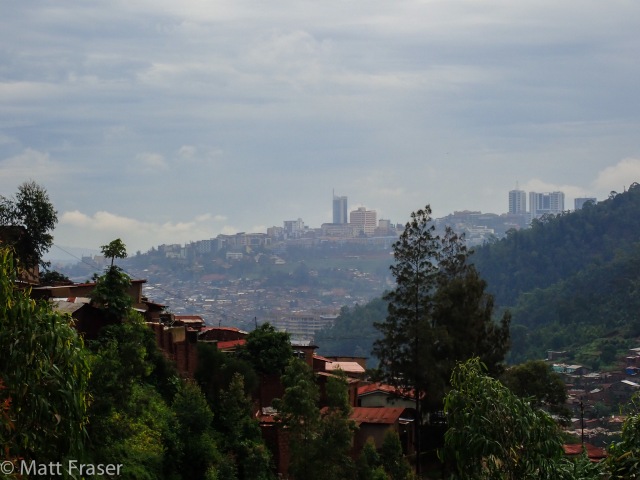
Le Pays des Mille Collines is how Rwandans refer to their own country, and it’s an apt description. There are eleven hills in the capitol city of Kigali alone.

OLYMPUS DIGITAL CAMERA

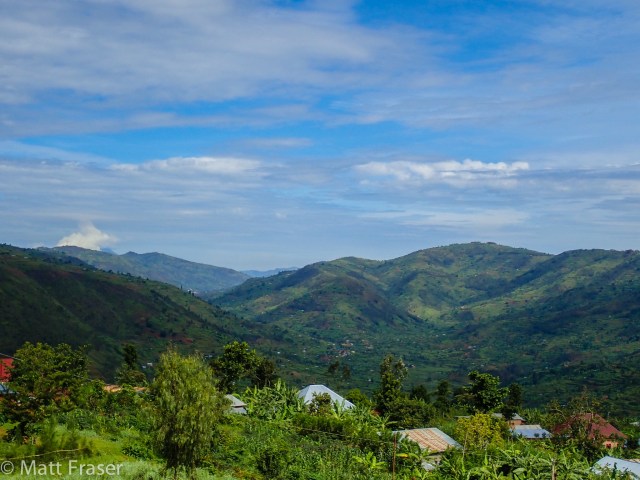
And as you leave the city behind, that hilliness only continues.

OLYMPUS DIGITAL CAMERA

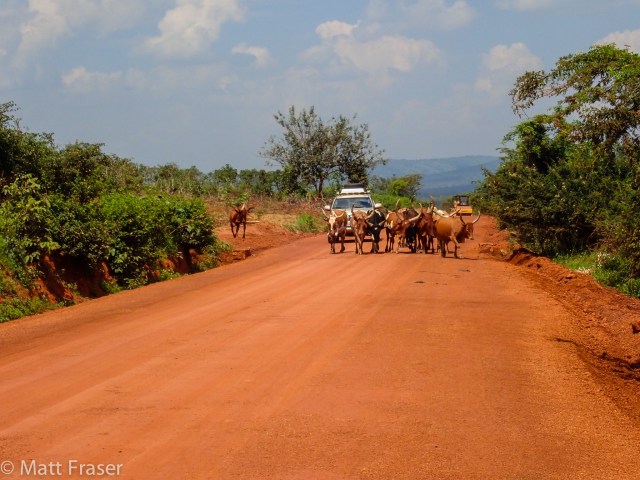
Rwanda is also mostly a very green country, due to a healthy rainy season, and that leads to a veritable bounty, but those hills can either help or hinder when it’s time to get to market.

OLYMPUS DIGITAL CAMERA

Of course, it’s not all green hills.

OLYMPUS DIGITAL CAMERA

And it’s not all domesticated animals, either.

Akagera-12

OLYMPUS DIGITAL CAMERA

OLYMPUS DIGITAL CAMERA

Sometimes the animals can be a bit difficult to see, especially in the long grass.

OLYMPUS DIGITAL CAMERA

Do you see him there? Let’s take a closer look.

Akagera-68

You see him now, yes? One must remain vigilant! Of course, when he finally stands up, it’s a bit easier.

Akagera-73

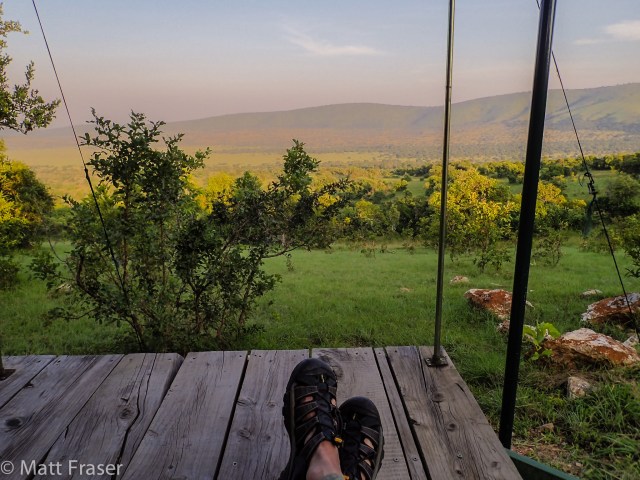
At the end of the day, back in camp, it’s time to stop worrying about the lions and just enjoy the scenery.

OLYMPUS DIGITAL CAMERA

Meanwhile, other parts of Rwanda are higher, steeper…

OLYMPUS DIGITAL CAMERA

… wetter, and definitively more lush with rainforest growth.

OLYMPUS DIGITAL CAMERA

But this is what you must tackle if you want to meet this fellow.

OLYMPUS DIGITAL CAMERA

Thank you for coming along with me on my recent trip to Rwanda. My wife and I traveled there at the end of December 2019 and beginning of January 2020, and while in-country, besides the city of Kigali, we visited two of four big national parks, Akagera (where the savanna wildlife photos are from) and Volcanoes (where we met a family of six (out of twelve) gorillas). Akagera is in the eastern part of the country, bordering Tanzania, while Volcanoes is in the Virunga Massif highlands in the northwest, bordering Uganda and the Democratic Republic of the Congo.


All photos used in this post are either my own or used with permission from Carole Bianquis, copyright 2019, with all rights reserved. However, please feel free to reblog or share the post and the photos, as long as you include attribution and a link back to this original.